By Charlotte Nambadja | 18 August 2026
On the cold and windy evening of 16 June, about 10 Angolans huddle around a fire in Windhoek’s Okuryangava settlement, waiting for a pot of rice to cook.
It’s been a long day. They’ve been on the streets – begging – since six that morning.
The fire is fed using wooden spoons and knobkerries they carve to sell in the city. They cannot afford firewood, so they burn some of their stock.
During the day, many of these children can be seen begging at road intersections – what they call their “duty stations” – around Windhoek. No one is allowed to cross into the other one’s territory, one of the minors says.
The Namibian spent five days with these children to understand where they come from, and why they keep returning to Windhoek.
We spoke to at least five children and five adults.
Namibians call them ‘penge ondola’, an Oshiwambo phrase for ‘give me a dollar’.
FAR FROM HOME
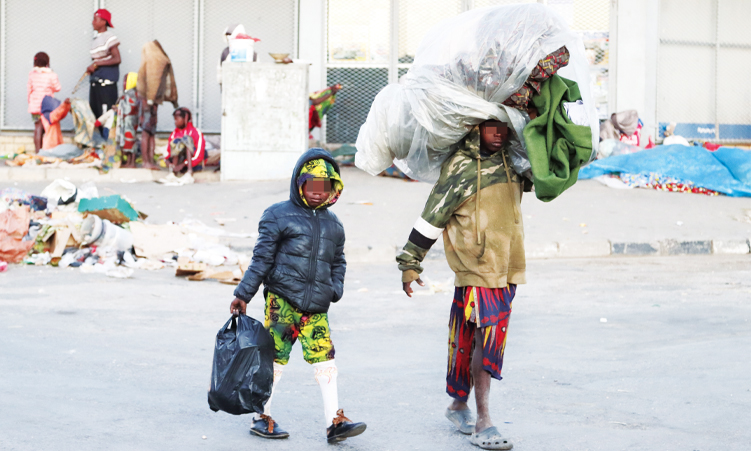
These children travel a long road – on trucks and buses, some on foot – to beg on the streets and sell wooden spoons. They’ve been escaping extreme poverty in Angola in this way since 2023.
Earlier on 16 June, a motorist at an intersection rolls up his window and avoids eye contact with one of the children. The girl, wrapped in a blue chitenge, stretches her hand out for a dollar.
“When will our government remove these children from the streets?” the motorist is asking his passenger.
This group of children are from the semi-nomadic Muila community of southern Angola.
They have made an open market at Okuryangava their home.
At the end of each day, they settle down for dinner to discuss their day.
Tonight, a woman asks them in their native Nyaneka language who made the most money.
“Whoever it is gets the most food,” she jokes.
“The food is not much, but even a handful each will make a difference,” she says.
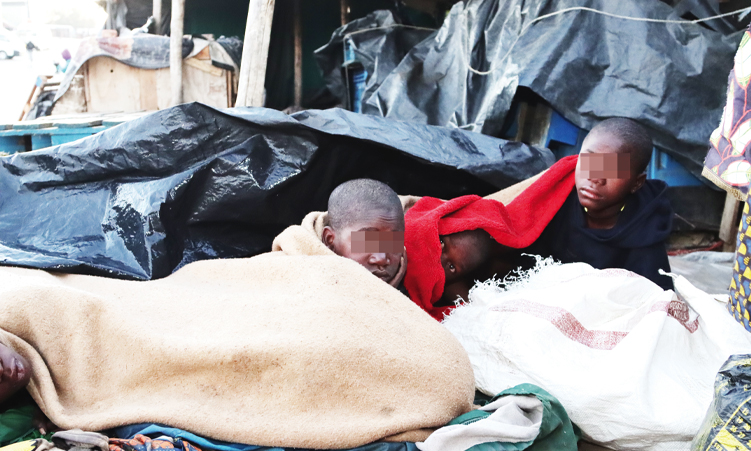
After the meal, the group makes plans for the next day, before unfolding the boxes they sleep on.
They take a blanket from a bag and lie down, huddling close together.
Tonight they had a meal, but there are nights they go to sleep hungry.
16 June is the Day of the African Child. This year’s theme was ‘Universal Access to Water, Sanitation and Hygiene for Every Child in Africa’.
TICKING TIME BOMB
The Angolan children have become a crisis Namibian and Angolan authorities are grappling to solve. They have been described as “an embarrassment to local tourism” by some tour operators.
In May 2026, City of Windhoek officials monitored these children at various intersections and shopping centres across the capital.
They documented skin rashes and signs of malnutrition. They also recorded money being taken from the children as soon as motorists hand it over.
“This practice appears to exploit the children,” says the report.
Windhoek mayor Sakarias Uunona attached it to a letter demanding action from minister of urban and rural development James Sankwasa in July.
The report, which The Namibian has seen, provides a first detailed account of how the authorities are trying to handle the issue.
The Namibian government has drafted an action plan and missed its own deadline, removed the children in December 2025 and watched them return within two months.
Part of the plan was to consider giving the children national documents, but this has failed.
THE GREAT JOURNEY
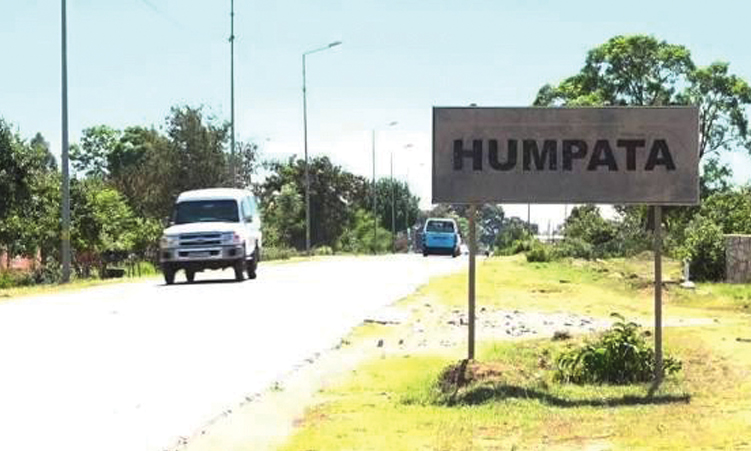
The children’s journey starts from their village, Bata Bata. They travel by motorcycle, motor bike carts, popularly known as ‘okahallelujah’, or minibuses. They sometimes walk or ask motorists for a lift.
The next destination is Humpata, the closest small settlement. There, the groups get on either bigger buses or mini taxis to Lubango and head to Santa Clara, the town closest to the border, coming face to face with Namibian and Angolan immigration officials.
A long electric fence separates the two countries.
Every day, a large group enters the country with temporary/emergency passports, the one document that permits them to move between the two countries. However, not everyone has documents.
Some claim there are ways to enter the country without crossing the official border.
“There is another route where illegal fuel smugglers known as ‘ngungula’, enter the country. We see some Mumuila risking entering the country through that route,” a motorist says.
Some have reportedly in the past entered the country in trucks, but truck operators allegedly stopped offering them lifts in 2022.
From there, they take buses to Windhoek, paying a discounted fare of about N$250 as migrant passengers, they say.
Bus operator *Nakale says he understands the risk involved in transporting undocumented migrants from one town to another, but he needs the money.
“We have to be human and assist these people when they give N$200 or N$250 as passengers.”

The standard rate per passenger to the north fluctuates between N$400 to N$350, depending on fuel costs.
Once in Windhoek, they sleep on boxes. In winter, they brace the streets without shoes and jerseys.
Some walk more than 21km – from Okuryangava to as far as Grove Mall – every day.
Speaking to The Namibian through a translator, one girl (10) says she has a designated area at the traffic lights where only she can beg. At the end of the day, adults collect the children.
The girls says she has travelled more than 1 100 kilometres from southern Angola to Windhoek. Her mother chose the spot and told her not to leave it.
“My mother gets me here when the day comes to end before we go and sleep. She and my siblings go to a different area while I’m told to stay here,” she says.
Every evening, she hands over what she has collected.
*Domingo (6), says he takes home between N$5 and N$20 a day.
“I sometimes get coins and put them in a plastic bag. Sometimes some kind people give me a note, N$10 or even N$20 but I am told by my aunt to ask for one dollar only,” he says.
“I also ask for bread or any food as we have nothing to eat most of the time. We eat once a day before sleeping,” he says, speaking through translator Bibiana Ngolofi with the consent of his aunt.
Siblings *Kaputu (5) and *Joao (8) came to Windhoek in January with their mother who left them in the care of another woman.
“Some people give me [money], while others do not even listen or look at me,” he says.
Joao tells The Namibian he makes N$30 a day around the Khomasdal area.
“Some people prefer to give bread or offer something else,” he says.
Joao recalls attending school for a short while, but says he had to stop to start herding livestock at Bata Bata village outside Humpata in Angola.

A woman, identified only as Rosa, says she collects the boys’ money for safekeeping.
“They might get robbed,” she says.
“When we are back home, we buy groceries, maize meal, cooking oil, and so on, and share this among the families, including the boys’ mother,” she says.
Rosa says every child is allocated to a ‘zone’.
Paulina* (12) says she prefers life in Windhoek because she can save money to give to her grandmother back home.
The group says they do not attend school because education is not free in Angola.
Public schools in Angola do offer free education, but not all children have access to this.
Linda Manuele (20), also from Humpata, says she came to Namibia in March.
“We are here to stay. Namibia is our second home. We survive better here. We can go to the clinic without paying, but in Angola you can be left to die. If you do not have money for medication, you will not get treated.”
Manuele says she was inspired by those returning to Angola with money.
She describes the Namibian government as helpful, saying although they do not have shelter and can hardly make ends meet, life in Namibia remains better than in Angola.
“I want to save my dollars so I can send them home with someone travelling towards the end of the year, or take them myself once I have raised enough money to support my parents, who also take care of my child that I left at home,” she says.
She says she wants to make money and not go to school.
“When we become women, we get married and have children. We are not encouraged to go to school,” she says.
Segunda Chifiru (34) says: “We can’t go back to Angola unless we raise or save enough money we can convert to Angolan kwanza.”
EMPATHY WITH WOMEN, CHILDREN
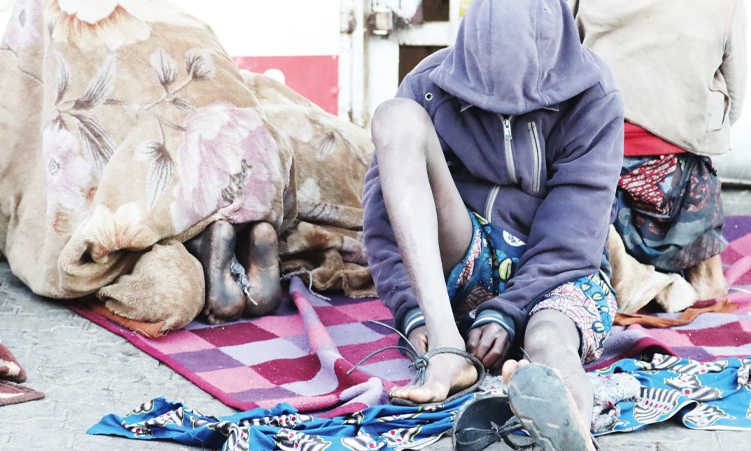
Kambuare (25) from Cahama in Angola’s Cunene province says he previously survived by selling knobkerries on the streets, but earned very little.
“People are more likely to give money and items to women and children, but for us men it is much harder,” he says.
The migrants say extreme drought has contributed to them searching for greener pastures, as the Angolan government has failed them.
Angola’s ambassador to Namibia Pedro Mutindi has not responded to emails or calls.
Recently, the leader of Angola’s opposition Liberal Party, Luis de Castro, criticised the Angolan ambassador during a visit in Windhoek.
He accused him of ignoring the issue of children begging on the streets.
“We came to Katutura to see how our fellow citizens are sleeping in the open.
“They left their own country, a country that is potentially rich, with very rich soil and underground resources, and they come here to live in total poverty,” he said.
De Castro said neither the ambassador nor anyone from the Angolan embassy had visited the migrants to assess their living conditions on the streets.
“The ruling MPLA has governed Angola for 51 years and has nothing more to offer its people,” he said at the time.
Angolan political activist Pedro Teca says the situation is worrying
“I have frequently published information about these children . . . attempting to draw the attention of our government. Unfortunately, there has been no official public statement regarding the matter to date,” he says.
The root causes of the phenomenon are deep-seated and require changes in governance, he says.
Teca calls for the Angolan and Namibian governments to form a joint commission to solve the problem.
DEADLINE EXPIRES
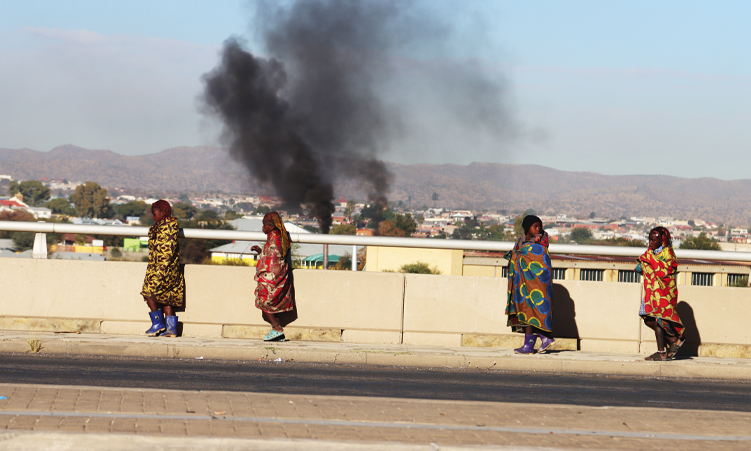
Uunona has given Sankwasa 14 days to explain the delay in addressing the matter. That deadline expired last week.
Uunona says nothing has been done since the matter was handed over to the Ministry of Urban and Rural Development in October 2025.
Questions sent to the urban and rural development ministry were not answered by the time of publication.
Ministry of Home Affairs, Immigration, Safety and Security executive director Nghidinua Daniel says he does not know where the migrants were taken after deportation in December 2025, but it was back to Angola.
“It is not a matter of the system failing, we are dealing with people who tend to move for various reasons, and our approach together with our Angolan counterparts is to find a long-lasting solution to the issue and that engagement is ongoing,” he says.
Daniel says engagements date back to 2024, when both countries met to try and find solutions.
“The public is urged to bear with the authorities as continuous efforts are made towards finding lasting solutions,” he says.
Executive director of international relations and trade Ndiitah Nghipondoka-Robiati says the ministry remains engaged with relevant parties to ensure the issue is handled in an integrated and coordinated manner.
“In a manner that takes into consideration our strong bilateral and historically grounded relationship with our neighbour, Angola, as well as our international treaty obligations of ensuring the best interests and well-being of the affected children,” she says.
Nghipondoka-Robiati says it would be premature to disclose details relating to these engagements.
Gender equality minister Emma Kantema and executive director of gender equality and child welfare Lydia Indombo have declined to comment on the matter, referring The Namibian to the home affairs ministry.
Legal practitioner Kadhila Amoomo says the Namibian government should give the Angolan minors “special” attention, stressing that human rights are universal and children’s rights are sacrosanct, regardless of where they are.
He says this is outlined in the United Nation Convention on the Rights of the Child, the Namibian Constitution and Child Protection Act of Namibia.
Amoomo is calling on the government to give the children a social grant of N$350.
Letters from Amoomo addressed to former and current presidents, which The Namibian has seen, demand immediate action on the situation of the Angolan children to be resolved.
“Find them a base or a centre where they can be housed, find them schooling, give them a grant of N$350 per month. We do not know the extent to which this problem is likely to increase.

“If we do not address this problem now, the number of Angolan children is likely to increase here,” he says.
City police assistant superintendent Katrina Nomboga says the Windhoek City Police is not aware of any criminal case registered against Angolan children for alleged acts of aggression towards motorists.
“The Windhoek City Police Service is unable to confirm the exact number of minors involved in crashes . . .” she says.
Numerous regulations address street begging: Under Street and Traffic Regulations (GN 9 of 1930) a person who wilfully sits, lies, stands or congregates in a street or public place in a manner that obstructs free traffic or hinders the movement of persons may be fined N$500.
In addition, causing or permitting a child to beg, or to sell or offer goods or
services in a public place without council approval, is prohibited and may be fined up to N$1 000.
National laws such as the Child Care and Protection Act 3 of 2015 also criminalises child exploitation and harmful child labour.
Legal Assistance Centre (LAC) Gender Research and Advocacy project coordinator Yolande Engelbrecht says: “The Namibian Constitution, the Convention on the Rights of the Child and the African Charter on the Rights and Welfare of the Child, which Namibia is party to, all protect the family and the child in particular, but also obligate the state to protect.
“The Child Care and Protection Act 3 of 2015 (CCPA), as the key legislation, mandates the Ministry of Gender Equality and Child Welfare to act as custodians of abused or neglected children. The ministry must safeguard any child from harm (regardless of whether the child is Namibian or foreign).”
* Not their real names
* This article was produced by The Namibian’s Investigative Unit. If you know of wrongdoing that should be exposed, you can securely write to us at: [email protected]